Ramp Plan Structure for New B2B Account Executives
A structured 30-60-90 plan replaces guesswork with measurable skill gates.
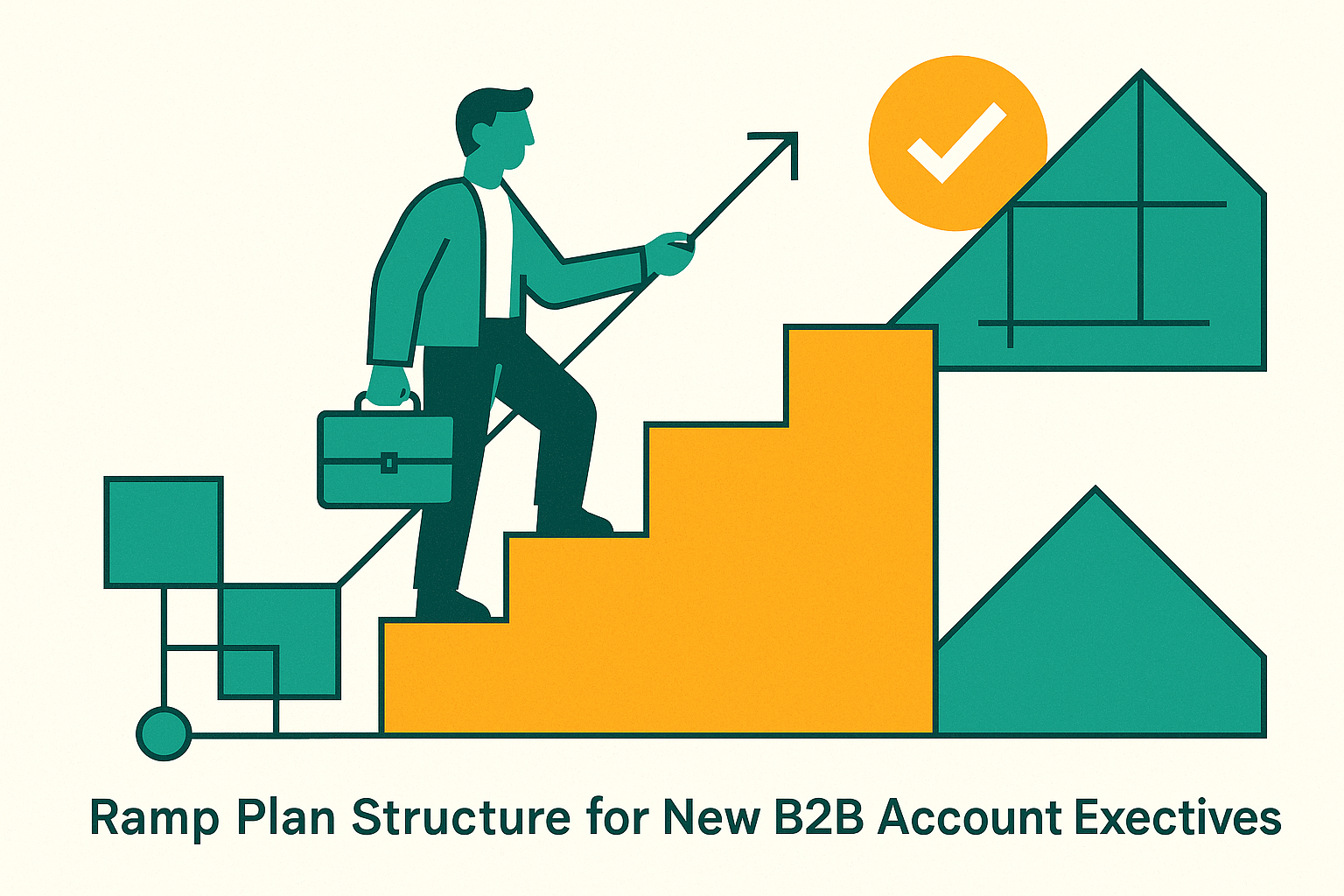
Most AE ramp plans fail for a simple reason: there's no structure underneath them. Not laziness, not bad intent, just an absence of clear milestones, phase-by-phase expectations, or any shared definition of what good looks like at day 30, 60, or 90. In a sales org without a formal plan, the default setup is almost always the same: shadow a senior rep for a week, then figure it out. That approach leaves new AEs guessing about what they're supposed to know and managers coaching against nothing measurable at all.
Replacing a failed AE hire costs one to three times that person's annual salary once recruiting, lost pipeline, and the replacement's own ramp time get counted. Average time to full productivity for a new AE runs three to six months. That's a wide window, financially and otherwise, and it happens to be the one variable a manager actually controls. A 30-60-90 structure exists to compress that window. It replaces guesswork with a shared map, one both the AE and the manager can point to and agree on. The rest of this piece builds out what that map actually looks like, phase by phase.
What the three-phase progression is built to do
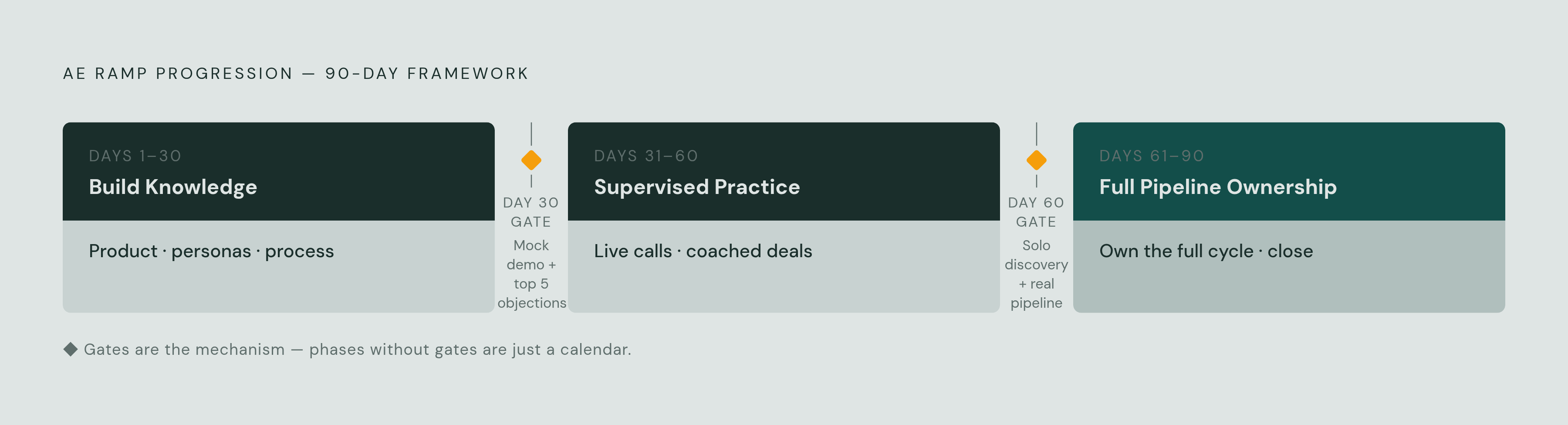
Three phases: learn, practice, produce. They're not equal thirds of a calendar quarter carved up for convenience. Each one is built to do something specific, and the order matters as much as the content inside each one.
Phase one, days 1 through 30, is about knowledge. An AE cannot sell what they don't understand, and pushing a new hire into prospecting before they can articulate the ideal customer profile or handle the five most common objections produces a lot of activity and very little quality. Phase two, days 31 through 60, shifts into practice under supervision. Real conversations with real prospects happen here, but with coaching cadences and co-selling built into the structure. The AE is building competency, not closing deals yet. Phase three, days 61 through 90, hands over ownership. The AE manages a real pipeline, runs full sales cycles with light support, and starts forecasting. Quota expectations, usually at a reduced rate, begin here too.
What makes this sequence work is that each phase gates the next one, not the three-part shape itself. Skill-building comes before accountability, every time, and the milestones at the end of phase two decide whether an AE is ready for full ownership or needs the timeline adjusted. Skipping phase one and rushing into prospecting costs a manager the ability to tell whether a quiet pipeline in week six is a skill problem or a product-knowledge problem. Skipping phase two and handing over full ownership too early produces the same ambiguity later, at a higher cost. The phases are a diagnostic tool as much as a training tool. Each one isolates a different variable, so that by day 90 a manager actually knows what's working and what isn't.
Days 1–30: building the knowledge base the AE will sell from
The first 30 days exist to build the knowledge base an AE will sell from, full stop, before that person has a single real conversation with a prospect. Success here is measured in demonstrated competency: product, ICP, competitive position, process.
Weeks one and two set the foundation. The AE should complete a full product deep-dive, covering feature walkthroughs, live demo practice, and use-case mapping. CRM setup happens here too: connecting email and calendar, configuring sequences, getting the operational plumbing in place before it's needed under pressure. Reading matters as much as doing in these two weeks. Ten closed-won deal notes and ten closed-lost deal notes, read directly in the CRM, teach a new AE more about what separates a win from a loss than any slide deck could. Shadowing rounds it out: three to five discovery calls and two to three demos alongside senior AEs, plus full ICP training covering who buys, why they buy, and what objections come up most.
Weeks three and four shift from absorbing information to producing it. The AE delivers a mock product demo, recorded and reviewed directly with the manager. Competitive positioning training gets layered in. The AE starts setting up personal outreach sequences and identifying the first batch of target accounts. And the AE writes, then has reviewed, the actual materials they'll use once prospecting starts: cold email templates, LinkedIn messages, a video prospecting script.
By day 30, the gate should be clear and observable. Can this person run a competent mock demo? Do they understand the ICP well enough to explain it back without notes? Have they handled the top five objections in role-play, convincingly? If the answer to any of these is no, moving into phase two anyway sets up a coaching problem that compounds over time. The whole point of phase one is to make sure that by the time this AE talks to a real prospect, they already know what they're talking about.
Days 31–60: moving from shadowing to supervised selling
Phase two gets the AE into real conversations and coaches what happens inside them, building in enough structure for a manager to distinguish a skill problem from a ramp problem.
Research from RAIN Group points to something specific here: the biggest driver of AE success at the six-month mark is structured practice paired with coaching feedback during these first two phases, more than raw intelligence or prior sales experience. That's a real argument for treating days 31 through 60 as the highest-leverage window in the entire ramp, not a transitional stretch to get through on the way to quota.
The core activities reflect that. The AE builds a target account list and begins actual outreach, prospecting calls, cold email sequences, LinkedIn messages. They co-lead real discovery calls alongside the manager or a senior AE, not solo, not yet. Weekly role-play continues, now focused on objection handling under more realistic pressure. Call recordings get reviewed together. The discipline here matters: a manager should pick one or two things to improve per week, not ten. Ten points of feedback after one call isn't coaching, it's noise, and an AE can't act on all of it at once. The AE also builds a personal pipeline plan and starts populating the CRM with real opportunities, not placeholders.
Activity targets give this phase shape. Fifty to one hundred touches per week is a reasonable benchmark, with milestones built around the first discovery calls booked and the first qualified opportunities created. Some AEs will push back on the role-play itself: rehearsing objection handling in a low-stakes room can feel artificial. But awkward practice with a manager beats an awkward discovery call in front of a real buyer, every time. Framing role-play as a coaching tool rather than a performance evaluation changes how an AE shows up to it.
The day-60 checkpoint has to function as a genuine gate, not a formality that everyone nods through on the way to phase three. If an AE still can't run a discovery call without heavy intervention, or the pipeline plan is thin, the honest move is adjusting the timeline, not pretending the calendar matters more than the skill does. Moving an underprepared AE into full ownership at day 61 just moves the ambiguity downstream, to a point where it's more expensive to fix.
Days 61–90: handing the AE full pipeline ownership with measurable expectations
The final phase hands the AE their own pipeline, from discovery through close, with light support. That's not because the AE is fully ramped by day 61. Ownership itself is what finishes the skill development that coaching started in phase two. Some things an AE only learns by carrying the full weight of a deal alone, and phase three is built around that.
The activities reflect a different kind of responsibility. The AE runs full sales calls independently now. They lead opportunity strategy sessions with their manager instead of just attending them, and they create deal plans for the accounts that matter most. Weekly pipeline reviews continue, but the content shifts from "how do I do this" to "here's where this deal stands." Conversion rates by stage get tracked. And toward the end of the window, the AE builds a 30-day plan for what comes after ramp, setting up the handoff into standard performance management.
Quota enters the picture here, typically at a reduced rate. The AE manages their own pipeline and runs deals start to finish, but isn't held to the full number yet. The phase-three success criterion is hitting that agreed, reduced target, nothing more and nothing less. Tracking during this window should lean on leading indicators: calls made, emails sent, meetings booked, opportunities created, stage progressions. Closed revenue lags actual performance by sixty or more days, so watching it alone during ramp shows a manager what already happened.
Once an AE has real accounts to manage, account planning starts to matter in its own right. That's the operational layer sitting between closing one deal and managing the next: mapping multiple stakeholders inside an account, finding white space for expansion, and building renewal strategy ahead of the contract date. It's a different skill than closing, and phase three is where it first becomes relevant.
The day-90 checkpoint closes the loop the whole plan opened. The ramp worked if both the AE and the manager can answer one question clearly at every stage along the way: what does good look like right now? The milestone system built into all three phases is what made that answer visible the entire time, instead of something everyone hoped would become obvious eventually.
How to set milestones that tell both sides what good looks like
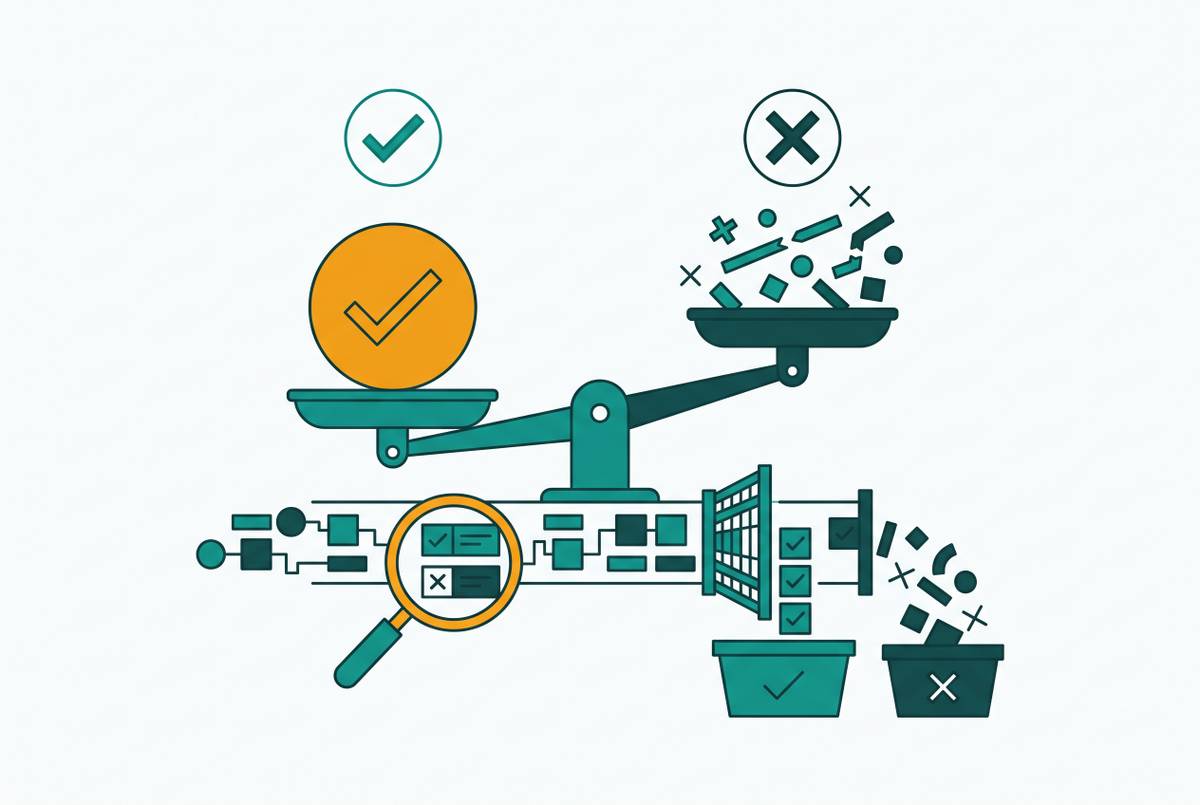
A milestone only works if it's observable and binary. Either the AE can deliver a competent demo or they can't. Either qualified opportunities exist in the CRM or they don't. There's no useful middle ground in a milestone, and the checkpoints at day 30, 60, and 90 only function as real gates if both sides treat them that way, not as dates on a calendar to acknowledge and move past.
SMART goals, specific, measurable, achievable, relevant, time-bound, give each phase something concrete to organize around. That framework keeps an AE working on something that actually matters instead of busywork that looks productive, and holds them accountable for real outputs.
Tracking leading indicators during ramp, calls made, emails sent, meetings booked, affects whether a manager can intervene in time, because quota lags actual performance by sixty or more days. A lagging metric tells a manager the ramp failed after the fact. A leading metric gives a manager room to intervene while there's still time to change the outcome.
The coaching that happens around these milestones has to be specific to matter. Telling an AE to "just get more pipeline" helps no one, because it gives them nothing to act on. Compare that to something like: "You can run a discovery call, but you're not yet handling pricing objections well. Here's the focus for the next two weeks." The second version names the gap and gives a path forward.
A few failure modes appear often enough to name directly. Milestones get set once at the start of a phase and never revisited, turning what should be a real conversation at day 30 and day 60 into a formality nobody takes seriously. Milestones sometimes get defined only in terms of output, meetings booked, calls made, with no skill criteria attached, like whether the AE can actually run a basic discovery call. Output numbers without a skill read behind them can't be coached effectively, because a manager doesn't know what's actually broken. And milestones sometimes differ between what a manager is tracking privately and what the AE believes they're being measured against. The fix for that last one is simple: share the plan before the hire starts, not on day one of the job.
Sharing the 30-60-90 plan with a candidate before they accept an offer signals a level of organizational maturity that candidates notice. It sets accurate expectations from the start, and that combination tends to reduce both offer hesitation and first-month attrition.
Why the ramp plan starts before hiring
The ramp plan and the hiring bar for a B2B AE role aren't separate documents, even though most orgs treat them that way. The phase-one success criteria, what an AE needs to demonstrate by day 30 to earn the gate into phase two, define what capability the new hire needs to walk in with on day one. If phase one assumes a baseline understanding of consultative selling, or comfort picking up a new product quickly, that assumption belongs in the interview process, not discovered for the first time three weeks into the job.
Before the next AE requisition goes out, does the hiring process actually test for what the ramp plan assumes? A candidate who interviews well on communication skills but has never worked a long, multi-stakeholder sales cycle may still clear phase one on paper, reciting the ICP back correctly, delivering a clean mock demo, while struggling with exactly the skill phase two is built to develop. Calibrating the hiring bar against the ramp plan, rather than treating them as two unrelated processes, closes that gap before it ever opens.
The 30-60-90 structure only delivers on its promise when it's read as one continuous system, not three separate documents handed off in sequence: a hiring bar that tells a manager who's ready to start the clock, a phase-by-phase progression that sequences skill before accountability, and a milestone system specific enough that both the AE and the manager know, at every single checkpoint, what good actually looks like.