Build vs. Buy Decision for AI Recruiting Tooling
Understaffed hiring teams must choose between building screening tools in-house or buying them.
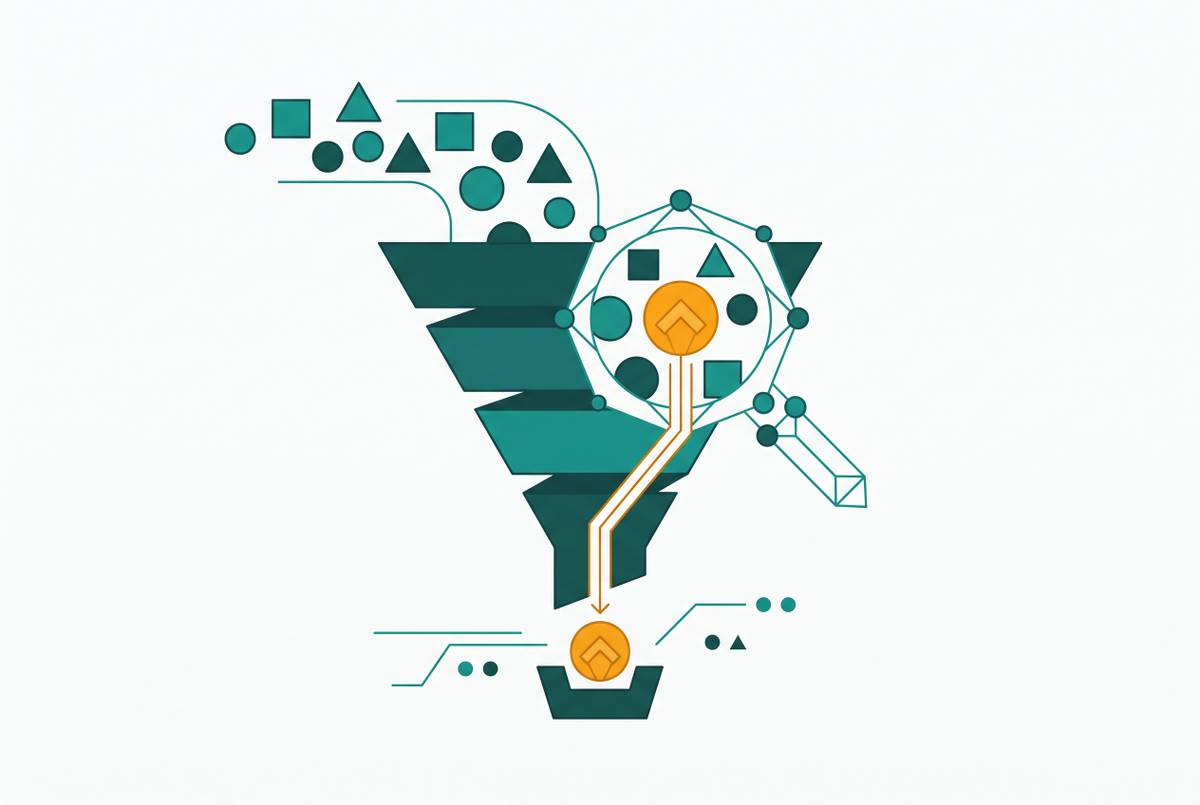
Hiring teams face a math problem now, and software alone can't solve it. Applications per recruiter are up 412% since 2022, and recruiting headcount at most companies has been cut by more than half. That gap is forcing a decision that used to be optional: build the screening and sourcing tools in-house, or buy them. For a founder running a pre-seed or Series A company, the stakes are personal. Every hour spent manually screening resumes is an hour not spent building the product, and that cost compounds week over week.
This is happening now, inside teams that are already understaffed relative to the volume coming in, not as a distant planning exercise for next year's budget cycle. A small sourcing or operations team facing triple-digit growth in applications has to make a real-time call about where to put its limited engineering hours. Vendors have noticed the same pressure and are consolidating their offerings into broader suites, which matters mostly as a sign of where the market is headed. It doesn't settle the question of what any individual team should do with its own hiring process this quarter. That decision rests on the specifics: what a team is screening for, how much compliance exposure it carries, and how much engineering time it can actually spare.
What the AI recruiting stack consists of
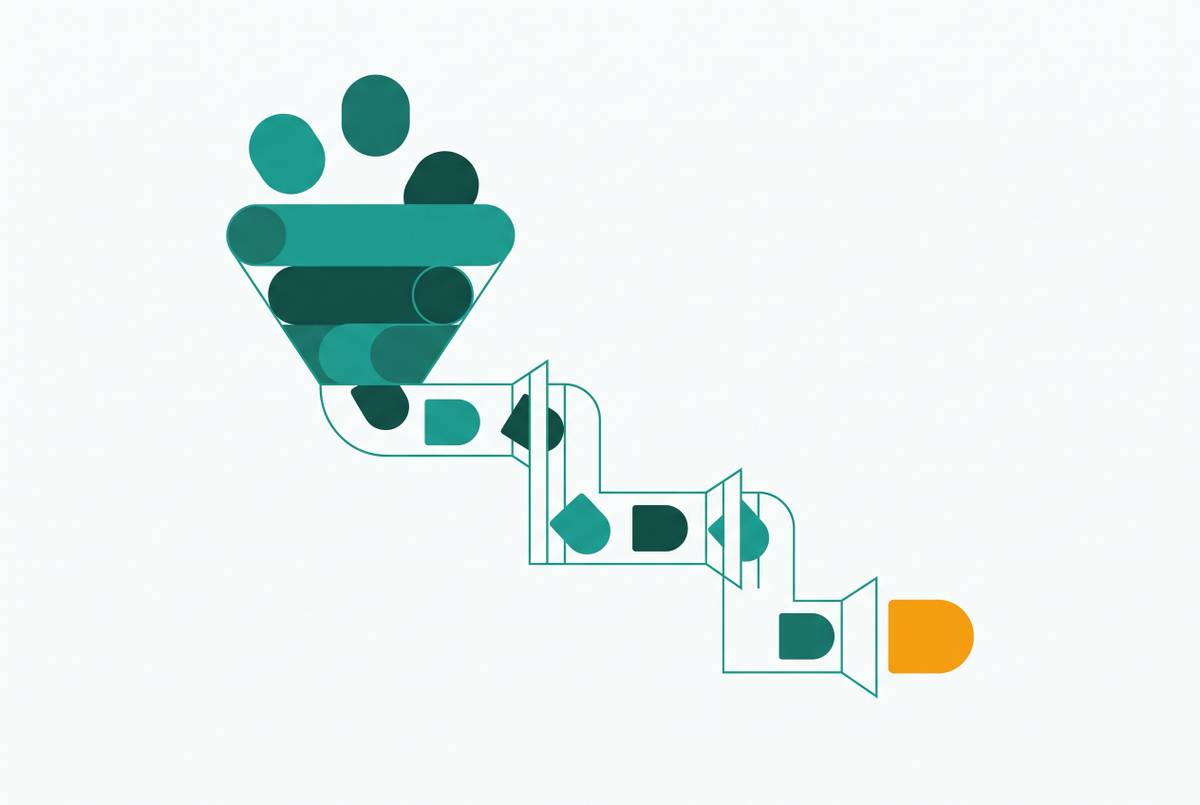
A hiring tech stack usually breaks down into six functional layers: sourcing, matching and screening, interview and voice, scheduling, analytics, and governance. Each layer solves a different problem. A tool built to find candidates isn't built to score them, and a tool built to schedule interviews has no idea whether the people being scheduled are any good. Treating "AI recruiting software" as one category hides this, and it is why teams confuse build-vs-buy decisions across layers.
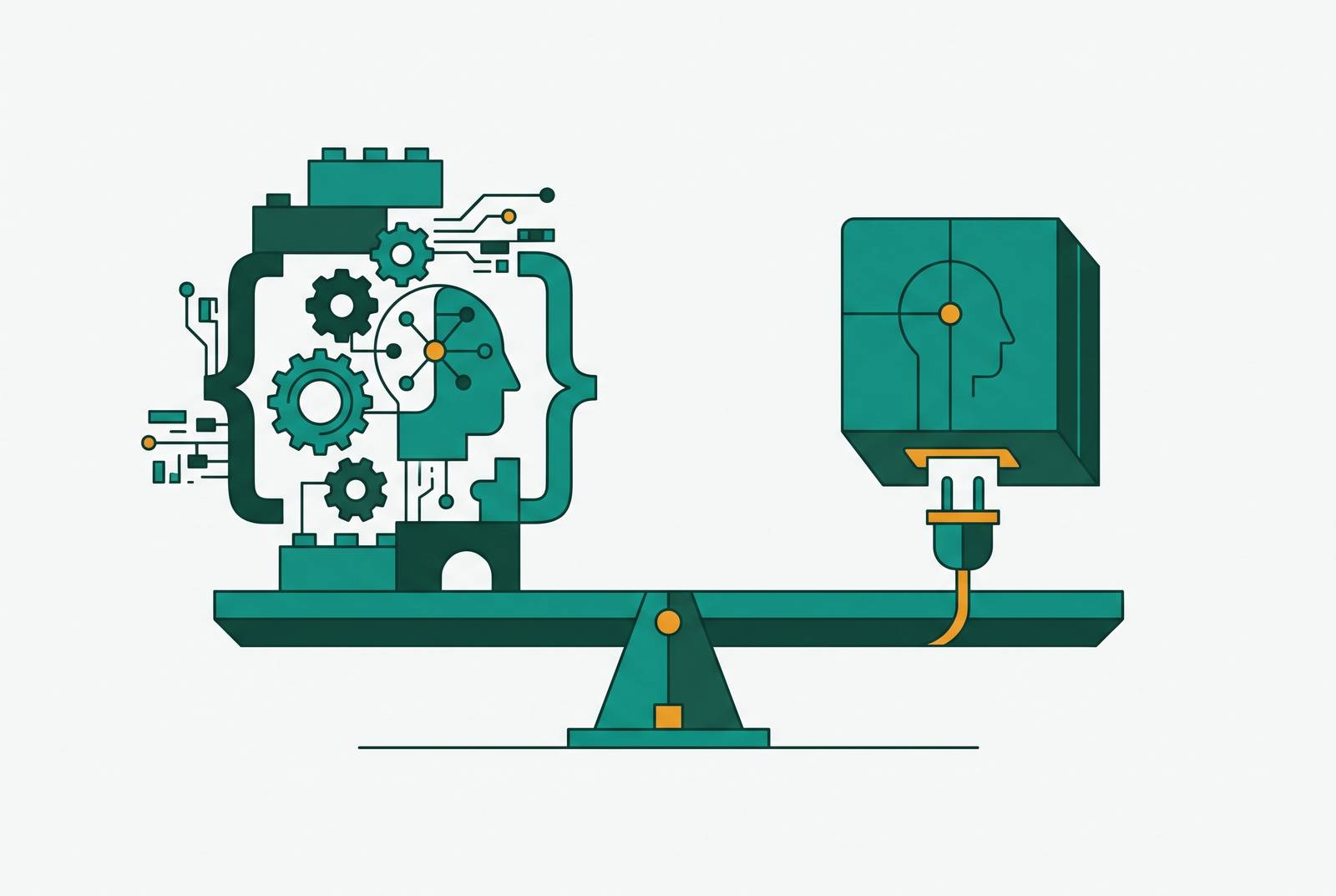
These three buying patterns appear within each layer. A team can extend its existing applicant tracking system with native add-ons, trading some specialist depth for simplicity and putting most of the governance burden on the vendor. A team can buy an AI-native point solution built specifically for one layer, getting more capability at the cost of extra integration work and a separate data processing agreement, with governance shared between buyer and vendor. Or a team can build an in-house tool on top of a commercial language model, skipping subscription fees in exchange for owning every prompt, every log, every validation step, and every candidate-risk control. So that third option puts the entire governance burden on the team doing the building.
Confusion in this space starts when one layer gets credit for solving a problem that belongs to a different layer. A sourcing tool can find great candidates faster, but it still can't fix inconsistent interview evaluation. A scheduling tool can book interviews efficiently, but it still can't bring a stale ATS database back to life. What decides whether a tool actually works is integration depth and the compliance evidence behind it, not whether its marketing page says "AI." Integrations tend to break at specific, documented points, like a mismatched field or an authentication handshake, not because an entire category of software is unreliable.
Where the build path becomes a liability
Building makes real sense for a specific category of work: generating draft job descriptions, summarizing intake calls and notes, constructing Boolean search strings, searching internal databases, and stitching together reporting dashboards. None of that touches candidate evaluation, and none of it needs an audit trail. For that kind of work, a lightweight internal tool, built fast and owned fully, is often the right call.
The picture changes the moment a workflow starts evaluating people or has to produce a record that regulators or candidates might ask to see. Regulated ranking, automated screening, voice interviews, and ATS-grade data sync all carry compliance exposure that grows the longer a system runs, plus integration complexity that doesn't shrink on its own. These are the places where buying a purpose-built tool tends to make more sense than building one, even for a team confident in its engineering talent.
The trap is that an in-house wrapper around a commercial language model looks like the cheapest option right up until it starts evaluating candidates or writing results back into the ATS. The JSON Schemas supplied with Structured Outputs from major model providers are not eligible for Zero Data Retention. If a wrapper writes scored candidate data into a hiring pipeline, it takes on the same audit and retention obligations a purchased tool carries, minus the vendor's service guarantees. OpenAI and Anthropic both commit, by default, to not training on business or API data. That protection ends at the exact point where structured outputs get written back into a system of record, which is the point where most in-house tools are headed anyway.
Speed to launch tells a similar story. A staffing firm can go live on a purpose-built platform in a matter of weeks. A custom build takes months to reach a stable first version, and it takes considerably longer before it can handle the messiness of real production use, according to Bullhorn's build-vs-buy analysis. You need ongoing security patching, uptime monitoring, bug fixes, and updates whenever a regulation shifts or an integration breaks upstream. Someone has to own that work indefinitely, and on a lean team, that someone is usually the engineer who already has other priorities.
There's also the matter of who holds the knowledge. A prototype built by one engineer carries real risk if that person leaves, since the system often has no documentation or institutional memory outside that one person's head. Bullhorn frames the security angle directly: candidate data, payroll records, and client contracts are high-value targets, and a homegrown system puts the full weight of monitoring, patching, and incident response on the buyer, not a vendor with a dedicated security team.
One objection deserves a direct answer. AI has genuinely lowered the barrier to building software, and that part is true. But a lower barrier to entry doesn't mean you get lower total cost or lower risk. It means a team can get to version one faster than it could five years ago. Version two, the one that has to survive real candidates, real regulators, and real edge cases, is where the expense starts piling up.
Hiring now shifts toward autonomous agents, systems that carry out multi-step work from sourcing through final scheduling without a human touching every step, and that changes this calculation further. When a single system handles that entire loop, buying a complete, unified platform starts to look different than buying six separate point tools. An end-to-end AI hiring system that runs sourcing, screening, and scheduling in one workflow, like Lantern, shifts the cost and complexity math for a lean team weighing whether to spend engineering hours building something comparable from scratch.
How the real total cost of ownership compares across build, buy, and hybrid paths
Run the numbers over 36 months across three paths, a custom build, a branded SaaS subscription, and a hybrid that builds on top of a bought foundation, and the dollar gap between them turns out to be modest: roughly five percent in either direction. The headline isn't the five percent: the hybrid path, where a team owns the workflow and data model that actually differentiates it while renting the commodity infrastructure underneath, consistently comes out ahead. The hybrid path's advantage comes down to what a team owns versus what it rents, not to chasing the cheapest line item.
That lesson shifts with headcount. For a small team, the right move is usually a lightweight ATS paired with low-admin sourcing and scheduling tools, nothing more complicated than the volume demands. Once a company reaches something like 500 employees, the priorities change: integration depth, role-based permissions, and repeatable screening workflows start to matter more than flexibility, and bought platforms tend to win at that scale because they've already solved those problems for other customers. At enterprise scale, compliance evidence, data controls that work across borders, and analytics that span multiple systems outweigh whatever appeal a quick internal wrapper might have had early on.
Costs missed in an initial build estimate appear later: updating a system every time a regulation changes, maintaining an integration every time an upstream API changes its behavior, patching security holes, and absorbing the recruiter hours spent working around a tool's limitations instead of actually hiring people. None of that appears in a first-draft budget, and all of it adds up over 36 months.
For a founder at the pre-seed or Series A stage, the real cost isn't infrastructure spend at all, it's time. Hours spent manually screening resumes are hours not spent building the product that justifies the company's existence. That tradeoff is the dominant cost in this whole conversation, and it's one that a spreadsheet comparing hosting fees will never capture.
The same economic logic explains why fragmented stacks get expensive in ways that don't show up on an invoice. A tool that writes its output to an isolated dashboard, rather than back into one shared system of record, creates a handoff problem between six different layers that someone has to manage by hand. A single platform that handles calibration and governance across the full hiring loop removes that handoff entirely, so a tool's integration depth and compliance evidence decide whether it works, not how impressive any one layer looks in a demo.
Why calibration, not the tool itself, determines whether AI screening produces useful results
The most common reason AI screening disappoints a hiring team has nothing to do with the technology. It's undefined criteria. Automating a screening process without first sharpening what "good" means produces a shortlist that looks ordered and ranked but behaves no better than a random sample of applicants. The tool did what it was told, but nobody told it anything precise enough to act on.
Proper calibration means translating "quality" into scored, specific signals before any AI model touches a single resume. That means naming the must-have skills, naming the nice-to-haves separately, writing down the disqualifiers explicitly, and assigning weights that the hiring manager has actually signed off on. Skipping that step leaves the system with nothing real to measure against.
Start by asking what this person needs to deliver in the first few months." From there, a team can work backward to the proof signals that would show someone can do that: specific projects, the scale they've operated at, depth with the tools the role requires, and relevant industry exposure.
Some promises in this space don't hold up yet. Predictive hire-quality scoring, the pitch that a system can forecast whether someone will succeed before they're hired, remains largely unproven at early-stage companies, according to Treegarden's guide. That kind of scoring needs outcome data from hundreds of past hires in similar roles, and most companies, especially young ones, simply don't have that history. Vendors who claim otherwise are often leaning on proxy metrics that look sophisticated but don't actually predict what they say they predict.
"Culture fit" scoring deserves particular skepticism. AI systems trained on a company's historical hiring patterns tend to replicate whatever demographic patterns already exist in that history, rather than assess anything resembling genuine fit. Treegarden's guide recommends structured behavioral interviewing instead, where specific questions and consistent scoring replace a vague, pattern-matched judgment call.
Greenhouse's 2026 post on AI recruiting software states the underlying principle directly: AI works best when it supports a hiring process that's already structured, visible, and accountable. When the process underneath is messy, AI moves that mess faster instead of cleaning it up. That's the real argument for calibration. It isn't a nice-to-have step before deploying AI; it's the thing that decides whether AI helps or just accelerates existing dysfunction.
Lantern's approach treats this as an ongoing relationship rather than a one-time setup. The system learns a company's definition of an exceptional candidate in about fifteen minutes, tests that definition against the real pool of available talent, and makes every adjustment to that standard visible and subject to human approval. Calibration, in that model, is a living standard that gets refined as the market and the hiring need change rather than a form filled out once at onboarding and forgotten.
How AI screening produces false positives and false negatives
AI screening tends to fail in two directions at once: letting weak candidates slip through, and filtering out strong candidates who don't match an expected pattern. Both failures trace back to the same cause. A model trained on historical hiring data learns the biases of whoever did the hiring before, so it repeats those biases but now with the appearance of neutral, data-driven precision.
Amazon's internal recruiting tool, built in 2018, is the case most often cited for a reason. It penalized resumes that contained the word "women's" (as in "women's chess club captain") because it had been trained on a decade of resumes from a mostly male applicant pool. The tool was supposed to surface the best candidates. Instead, it mechanically reinforced the exact bias it should have corrected for.
False positives, meaning candidates who score well on paper but aren't actually qualified, get reduced through a few concrete mechanisms: scoring across multiple independent signals rather than one, keeping a human in the loop to calibrate results, and building a feedback cycle where the model actually learns from its mistakes. A well-built system down-weights keyword-stuffed resumes, checks claimed achievements against what's realistic for the seniority level, compares a candidate's claimed tools against the actual depth of their use, and cross-checks tenure patterns for inconsistency. When a recruiter flags someone the system scored highly as a poor fit, that feedback should sharpen the model's precision over time rather than disappear into a static rubric that never updates.
False negatives are the harder problem, and most tools don't address them. If a system optimizes purely for credential pattern-matching, it will reliably miss someone who built exactly the right things but doesn't carry the expected job title or come from a brand-name employer. AI platforms that analyze patterns across millions of career paths can identify these less obvious high performers, sometimes called hidden gems, but only when the scoring rubric is built around actual proof of work rather than credentials used as a stand-in for it.
The broader environment has gotten harder to read on both sides of the table in 2026. A large majority of hiring managers now agree that AI is making it genuinely difficult to tell whether a candidate's resume, portfolio, and interview answers reflect their own abilities or an AI tool's. In response, the strongest hiring teams are leaning on live problem-solving sessions, project critiques, and real-time technical walkthroughs, formats that are much harder to fake with a scripted or AI-generated answer prepared in advance.
One category deserves a flat caution: AI video interview analysis, the kind that claims to judge a candidate's suitability from facial expression, tone of voice, or word choice, rests on shaky scientific ground and carries real legal exposure. Illinois and New York City are among the jurisdictions that have passed laws restricting or requiring disclosure of this kind of analysis. Treegarden's guide recommends that most HR teams avoid this category entirely until both the underlying technology and the regulatory landscape around it settle down.
Sources
- AI Talent Acquisition Stack 2026: A Vendor-Category Map for Build-vs-Buy Decisions ai talent acquisition software
- AI Recruiting Tools 2026: What Works, What's Hype, What to Buy
- Build vs buy staffing software
- Best AI recruiting software in 2026: The top 13 tools
- Build vs Buy: The 2026 Case for Custom AI Tools