Every Candidate Rank in Your Pipeline Should Have a Citable Reason Your Team Actually Wrote
Written reasons for candidate rankings protect both hiring quality and legal compliance.
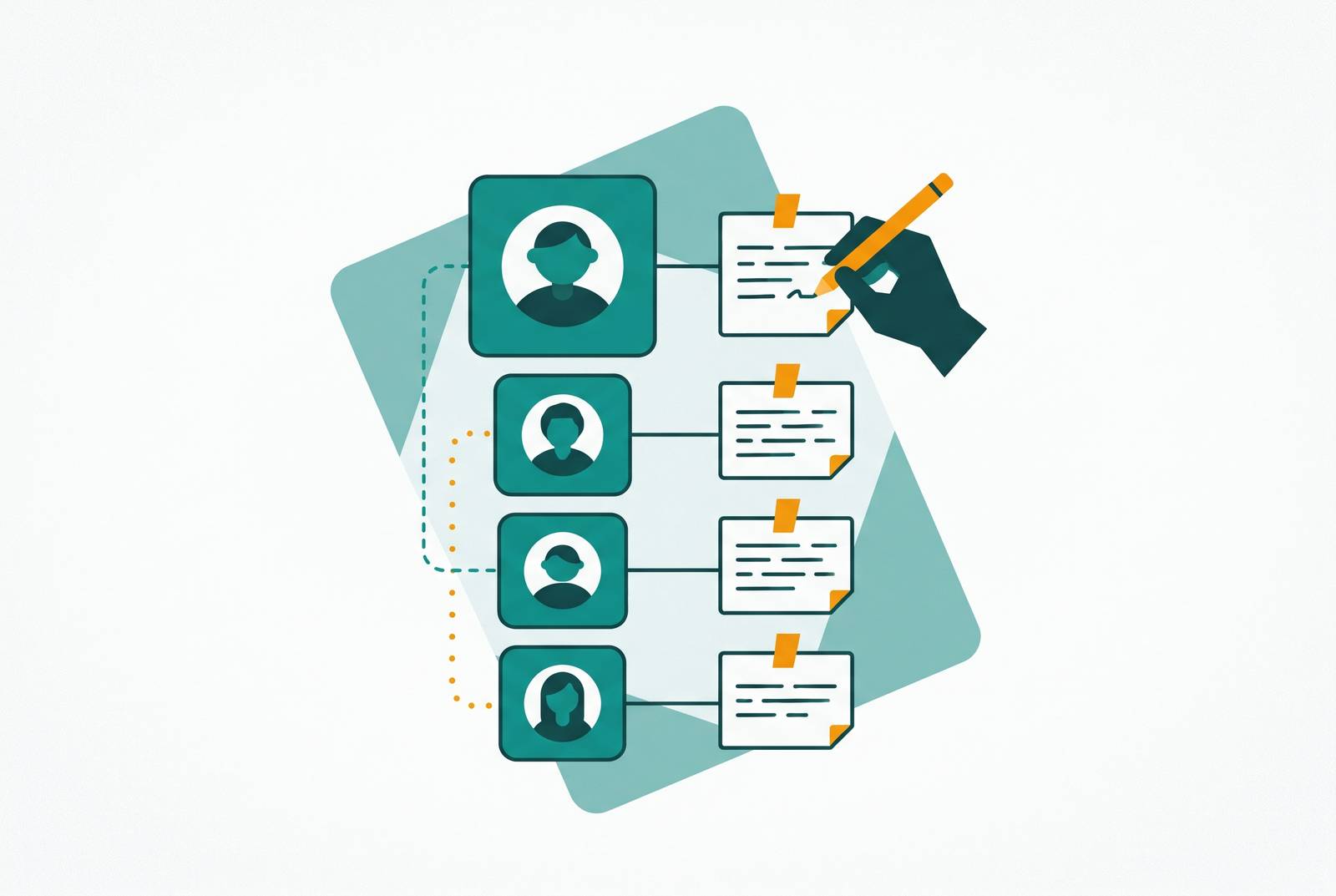
An AI recruiting tool with human-approved hiring standards and an audit trail needs more than explainable scores. The team should approve the criteria before candidates are evaluated, write an evidence-based reason before each rank is assigned, and approve any change to the standard.
Why a pipeline rank without a written reason is not a judgment at all
A founder opens a shortlist and asks why candidate #3 is ahead of candidate #7. The recruiter can point to their scores, but cannot reconstruct the reasoning behind the difference. What evidence counted, and against which agreed standard? Without a written answer, the team has endorsed the ranking process rather than exercised judgment about these candidates.
The team needs a reason connecting the candidate’s evidence to its specific definition of exceptional. A rejected candidate, a regulator, or a hiring manager who inherits the pipeline needs that connection to understand the decision. A score locates someone in an order, but cannot explain why they belong there.
How AI screening reached mainstream adoption without solving the accountability problem
Aptitude Research and iCIMS data show broad but shallow adoption of AI in recruiting. A large majority of companies use it somewhere in talent acquisition, while only a small fraction use it broadly across hiring processes. Installation is not the same as integration. A tool can be running without a shared standard governing what its rankings mean.
Gartner’s October 2025 press release says that most HR leaders have not seen much business value from AI tools. That finding challenges the assumption that adoption alone produces better hiring. Faster processing is only part of the job. The team still needs to know whether the order is based on criteria it can defend.
Is it better to rank people faster and more consistently anyway? It can be, provided the standard being applied is sound. If the standard is unsound, applying it consistently can turn a mistake made now and then into one repeated across many decisions. The team still has to account for the decisions made through the tool.
What candidate trust data reveals about pipelines that cannot explain themselves
Greenhouse’s 2025 AI in Hiring study found that only a small fraction of job seekers believe AI makes hiring more fair, while most hiring managers trust it for faster and better decisions. Managers see the time they save, while candidates may have no way to check what the decisions are based on. The two groups are judging different parts of the process.
A candidate who asks why they ranked third has good reason to ask. A score without reasoning does not answer it. If the employer cannot connect the assessment to evidence and agreed criteria, the candidate has identified a structural gap.
That gap can lead candidates to withdraw and harm how people see the employer. A strong candidate may leave while the team believes its process is working well. If a rejected candidate challenges the decision, the problem becomes more demanding. The employer must reconstruct the basis for a ranking it may never have documented.
The regulatory floor that now requires explainability, not just fairness intent
The EU AI Act makes that problem with documentation a matter of compliance too. The European Commission states that rules for high-risk AI systems in areas including employment will apply from 2 December 2027. Fairness intent alone is not an adequate account of how a system assessed someone.
A human-authored rationale is not, by itself, proof of compliance with every applicable obligation. Its value is more specific. It makes the basis of a hiring judgment available for scrutiny, rather than leaving the employer dependent on an unexplained output. That documentation discipline operates alongside the wider legal requirements.
Active litigation illustrates the exposure when that basis is unavailable. One lawsuit alleges that an AI hiring tool used social media profiles, location data, and internet activity candidates had not submitted to produce unexplained ranking scores. For vendor selection, the lesson is to favor visible reasoning and documented efforts to minimize residual bias over claims of “zero bias.”
Why AI ranking without prior calibration reproduces the biases it was meant to remove
External scrutiny points back to an internal question. What, exactly, has the system learned to reward? A model trained on historical hiring data can learn the appearance of past hires, including school affiliations, credentials, and title patterns that did not predict performance. If the team has no written standard for the role, those patterns can look like proof that someone is a good fit.
Amazon’s recruiting tool shows this mechanism clearly. It was scrapped after it was found to penalize resumes containing the word “women’s” and to downgrade graduates of two all-women’s colleges. The model had learned from a decade of predominantly male hiring. That example demonstrates a failure mode.
The resulting errors run in both directions. A weak candidate can rank highly because they resemble past hires, while a strong candidate can disappear because they do not. The second error is harder to notice because the excluded person may never reach an interview. A written definition of exceptional, established before ranking begins, gives the team a standard against which to question both outcomes.
How do you make sure an AI recruiter documents why each candidate was ranked?
A citable rationale connects three things in prose. It names the pre-agreed criteria, identifies the candidate evidence weighed against them, and explains how that evidence supports the rank. “Strong communicator” is not enough. “Described the architecture decision she made under a three-week deadline and the tradeoff she navigated” identifies something another evaluator can examine.
The explanation must then do the judgment work. Why does that example meet the team’s communication standard, and how much should it count in the assessment? Use the agreed definition of exceptional as the reference point. Without that reference point, a candidate can seem stronger just because the others on the shortlist are weaker.
A focused scorecard makes that reasoning manageable. A well-built one uses four to six weighted criteria, with must-have requirements typically treated as separate pass/fail knockouts. Criteria too slight to meet a minimum weight threshold add noise.
Sequence is the safeguard against rationalization. The team writes the rationale before assigning the rank, rather than attaching a plausible explanation afterward. Someone who missed the interview should be able to understand and challenge the assessment from that record. That is what makes the reason citable.
How calibration before the search changes what the ranking reveals
A panel that disagrees about domain expertise and learning agility does not yet have a shared ranking standard. One interviewer may give weight to experience while another cares more about how well someone adapts. Both can write thoughtful notes and still produce contradictory judgments. Calibration resolves that disagreement before candidates become the objects of it.
The company’s stage changes what needs resolving. At Series A, technical skills, communication, and team fit need documented meanings that interviewers can apply consistently. Before Series A, the choice between senior production experience and enthusiasm in founding engineers can shape shipping velocity over months. The ranking rationale needs to reflect that choice.
What if the team needs to see candidates first? Candidates may sharpen its understanding, but the conditions for doing the work exist before the shortlist does. If the team leaves those conditions unstated, the first few candidates are judged against a benchmark they cannot see. When new information warrants a change, the revised criterion or weight should be documented and human-approved so later ranks remain traceable to the standard actually in force.
What the market actually looks like when you apply your criteria to it — before you rank anyone
A clearly written standard can still describe an unreachable hire. The low-churn labor market in mid-2026, with low hires and quits rates, has fewer active candidates than teams used to 2021 conditions may expect. Calibration needs a view of the supply available within the search window.
Talent intelligence before the search helps establish whether the desired profile exists in sufficient numbers, at which seniority levels, and in which geographies. A large passive candidate pool does not settle that question. Receptiveness within any 90-day window is much smaller, so potential names are not equivalent to available candidates. Treating them as interchangeable makes the hiring target look more attainable than it is.
This market check belongs before individual ranking. It helps the team agree on an achievable benchmark while preserving the requirements of the work. An unrealistic target can extend time-to-fill for nonexecutive roles and encourage the standard to drift. Rankings are less useful when nobody can say which version of the target they are based on.
How citable rationales surface the strong candidates that credential-matching misses
The requirement to name evidence exposes weak proxies. A familiar school, employer, or title may explain why a profile attracted attention, but does not by itself explain why the candidate will perform well on this team. Under high sourcing volume, identical filters can produce identical shortlists. The written rationale forces a further question about what those credentials actually demonstrate.
People with adjacent titles, people in adjacent geographies, and long-tenured people who rarely receive messages may have built the right things without matching the familiar profile. GitHub activity, patents, publications, and portfolios provide evidence of work beyond those credentials. The team still needs to judge how that work fits the role’s criteria before giving it credit.
The same discipline helps with prior applicants. Without a written reason for turning a candidate down earlier, a team has little to go on when deciding whether a changed standard calls for another look. With one, it can revisit the evidence and the criterion that previously held the candidate back.
What the human role in ranking actually is when AI handles the process
If AI handles sourcing, screening, and scheduling, does requiring people to write rationales defeat the point? The distinction is between administering the process and owning its judgments. Automation can reduce the former without making the latter unnecessary.
An explanation generated by a system is not the same as a team-written reason for accepting its assessment. The human role is to decide whether the evidence supports the rank under standards the team approved. That responsibility includes updating those standards when new information changes what the role requires. Merely accepting an output leaves the underlying judgment unexamined.
A recruiter responsible for relationships, judgment, and outcomes may face a larger pipeline because of automation. That makes undocumented rankings a larger risk. Changes that people can see and have approved, along with written rationales, help the team answer for its decisions as the pipeline grows. Each rationale also becomes feedback that can make the team’s definition of exceptional more precise over time.
What a pipeline looks like when every rank has a reason behind it
The practical test starts with any candidate record. Can a hiring manager read the specific evidence linked to the agreed criteria and understand why the candidate holds that position? If so, the record supports a substantive disagreement about the judgment. The conversation can address whether an example meets the standard.
After a search closes, those records support improvement. The team can review where its criteria predicted performance and where they did not, then revise the standard using evidence. A new hiring manager inherits that reasoning. When a rejected candidate, regulator, or internal audit asks for the basis of a decision, the answer does not have to be invented afterward.
The goal is a pipeline in which AI processing and human judgment stay in the same loop, with an accountable reason behind each candidate’s rank.